
French business culture for consultants: how to navigate the unwritten rules (a first-hand guide)
Introduction
French business culture consultant filming fails for 70% of expats within 18 months. They mistake slow, hierarchical decision-making for disinterest.
As an intercultural strategist, I’ve decoded the unwritten rules that protect your projects and reputation. This first-hand guide reveals the 4 critical pillars of French corporate life and the hidden benefits of mastering them.
The cost of ignorance is a stalled contract or a damaged client relationship. French managers, known for their analytical ‘French flair’ and role as Devil’s Advocate, will intellectually dismantle an unprepared approach.
So, how do you secure a stable CDI in this environment? What truly happens during the two-hour lunch critique? And can you film effectively without navigating the unspoken hierarchy?
We’ve analyzed the latest expatriate testimonies and expert insights to structure your adaptation. This isn’t theory—it’s a field manual.
Your 7-minute read starts now. Let’s roll camera on your success.
From relocation shock to cdi security: my consultant journey into france
My relocation shock wasn't about language—it was about contractual whiplash. Arriving from Saudi Arabia via a freelance agency contact, my prior visa was cancelled for a French company sponsorship. I landed at an international firm like Nokia where English was the official language, creating a false sense of ease. The real culture shock was legal: transitioning to a Contrat à Durée Indéterminée (CDI). Unlike my previous experiences in more flexible markets, I discovered that a CDI offers profound stability. You simply cannot be fired overnight; terminating such a contract requires a documented, justified social plan, making sudden layoffs virtually impossible. This wasn't just a job change; it was a fundamental shift from transactional gigs to embedded security. The lesson was clear: in France, the contract defines your reality, and a CDI is the ultimate key to long-term peace of mind.
The 4 pillars of french work culture that will surprise you (and how to adapt)
Navigating French business culture requires understanding its non-negotiable foundations. Based on 2026 intercultural training data, these are the four pillars that most surprise foreign consultants and the strategies to adapt.
- 1. Hierarchy is a Process, Not a Barrier. Decisions are rarely made in the first meeting. A slow, consensus-driven process that consults multiple hierarchical levels is the norm. Adaptation: Map the decision-making chain early. Present your proposal as a logical framework for discussion, not a final pitch, and be prepared for multiple review cycles.
- 2. The Intellectual Arena. Meetings are for debate, not just updates. French managers are known for their analytical 'French flair' and often act as the Devil's Advocate, probing ideas rigorously to test their strength. As intercultural consensus notes, "This direct challenging of ideas, often perceived as pessimistic in optimistic cultures like the US, is actually a sign of engagement and a quest for robust solutions." Adaptation: Don't defend; debate. Arm yourself with deep, logical rationale and view critique as a collaborative stress test.
- 3. The Sacred Work-Life Boundary. The typical French workday runs from 8:30/9:00 AM to 6:30/7:00 PM, often including a long, social lunch. However, strong privacy norms mean post-work socializing with colleagues is rare. Adaptation: Respect the lunch break as relationship-building time but never assume after-work drinks are standard. Keep interactions professional and within office hours.
- 4. Formality as Respect. Communication is structured and titles are used. Aggressive, informal "selling" is counterproductive. Adaptation: Start all interactions with formal titles (Monsieur/Madame) until invited otherwise. Prioritize well-reasoned written reports and structured arguments over charismatic appeals.
Mastering these pillars transforms friction into fluency, turning cultural surprises into strategic advantages.
Coffee break critique: how office dynamics play out in a french setting
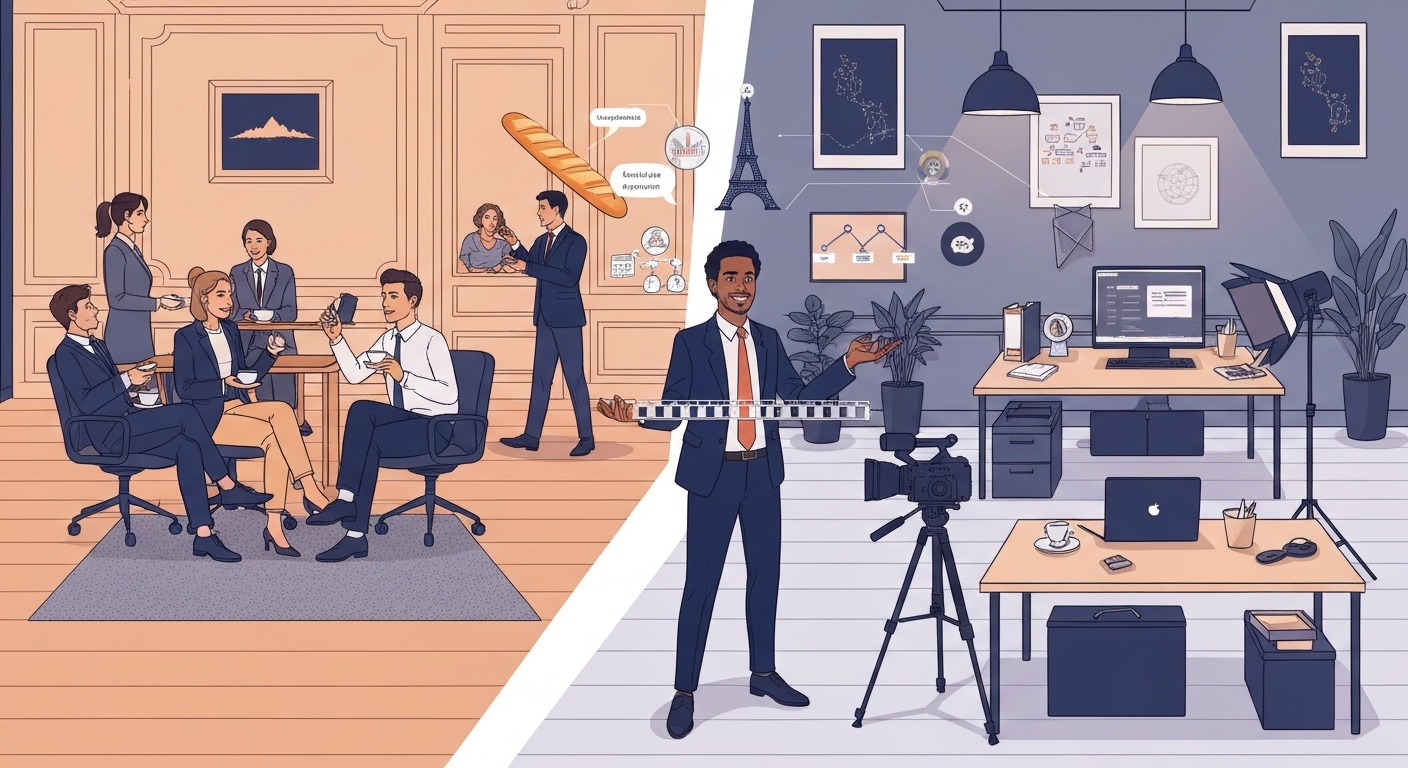
The true pulse of a French office is often taken not in the meeting room, but during the pause-café. This is where unspoken hierarchies and intellectual currents surface. For instance, a consultant filming a corporate documentary might observe a team dissecting a morning meeting. The critique isn't personal gossip; it's a live analysis of logic and strategy. You might hear, "Did you see how Pierre structured his argument? He presented the historical data first to frame the problem, but he didn't address the counterpoint from Finance." This isn't backbiting—it's a continuous, collective refinement of ideas. The key for an outsider is to listen for the substance of the critique, not just the tone. It reveals who the true thought leaders are, which arguments hold weight, and what unspoken criteria a project must meet to gain support. Missing these coffee-break insights means missing the map to the real decision-making landscape.
Your turn: what's your biggest french workplace challenge?
The framework is clear, but your situation is unique. Are you struggling to secure buy-in from a layered hierarchy? Is the Devil's Advocate dynamic stalling your projects? Perhaps interpreting the nuanced feedback during the pause-café has you puzzled.
Share your biggest challenge in navigating French business culture below. Your specific scenario is the key to unlocking a tailored strategy.
Conclusion
You now have the map to navigate the unwritten rules of French business culture. We’ve moved from the initial relocation shock to understanding the four pillars that govern everything from hierarchical decisions to coffee-break critiques. The core benefit is clear: transforming cultural friction into strategic fluency to secure your projects and reputation.
Imagine your next project review. Instead of facing stalled decisions, you expertly guide the consensus-driven process. When met with Devil’s Advocate challenges, you engage in robust debate, earning respect. You interpret the pause-café insights accurately, aligning your approach with the real hierarchy. The result isn’t just approval; it’s trust, a smoother path to a stable CDI, and the authority to lead effectively in a complex environment.
The timeline for mastery isn’t infinite. With France’s labor laws and cultural norms remaining stable but demanding through 2027, the cost of inaction is measured in missed contracts, damaged client relationships, and prolonged professional alienation. The window to move from observer to adept practitioner is now.
Before your next meeting or filming day, ask yourself:
- Have I accurately mapped the decision-making chain for my current project?
- Am I mistaking intellectual critique for personal rejection?
- Is my approach to formality and work-life boundaries aligning with local expectations, or creating silent resistance?
These aren’t just questions; they are your immediate diagnostic tool.
The framework is laid out. The complexity is now manageable. You are no longer decoding from scratch; you’re applying a proven field manual. While this guide provides the universal principles, your specific challenge—whether managing a cross-cultural film crew, securing buy-in for a sensitive documentary, or negotiating your contract—demands a tailored strategy.
Let’s craft your personalized navigation plan. Book your 30-minute strategy session to adapt these pillars to your exact project and objectives. 🎬
Sources
- https://www.youtube.com/watch?v=bPcebK0dzyg
- https://agoodlifeinparis.com/expat-success-france/
- https://www.todaytranslations.com/consultancy-services/business-culture-and-etiquette/doing-business-in-france/
- https://www.globalbusinessculture.com/countries/france/
- https://www.akteos.com/akteos/intercultural-insights/countries-and-regions/europe/international-perception-of-french-managers