
Blackmagic camera rental paris indie film: your assurance of netflix-approved quality (3 critical steps)
Introduction
90% of your indie film's runtime must be shot on a Netflix-approved camera. This is the cold reality for distribution in 2026. Forget the myth that Blackmagic gear is just for passion projects; the URSA Cine 12K LF is now on Netflix's official list.
As an insider, I’ll show you how this changes the rental game in Paris. This guide reveals the hidden benefits of this certification and the three critical steps to leverage it, across six detailed sections.
The cost of inaction is stark: rent the wrong camera or mismanage your workflow, and your project faces outright rejection from major platforms, wasting your entire budget.
So, what exactly is on Netflix's 5-point technical checklist? Why is the 90% compliance rule non-negotiable? And how do you navigate the Paris rental inventory gap for these newly approved cameras?
We’ve analyzed the latest 2026 Netflix decrees and Blackmagic’s homologation to provide a structured methodology. You’ll get a clear, actionable path from camera selection to delivery pipeline.
Your roadmap to compliant quality starts now. (7-minute read) 🎬 Let’s roll camera.
Why netflix's stamp of approval changes everything for blackmagic rentals
For the indie filmmaker, a camera is a creative tool. For a distributor like Netflix, it's a technical compliance checkpoint. The January 2026 addition of the Blackmagic URSA Cine 12K LF to Netflix's Approved Camera List transforms the rental equation. This official stamp is not a suggestion; it's a gateway to global distribution, shifting Blackmagic from a budget-conscious choice to a strategically validated one for professional delivery pipelines.
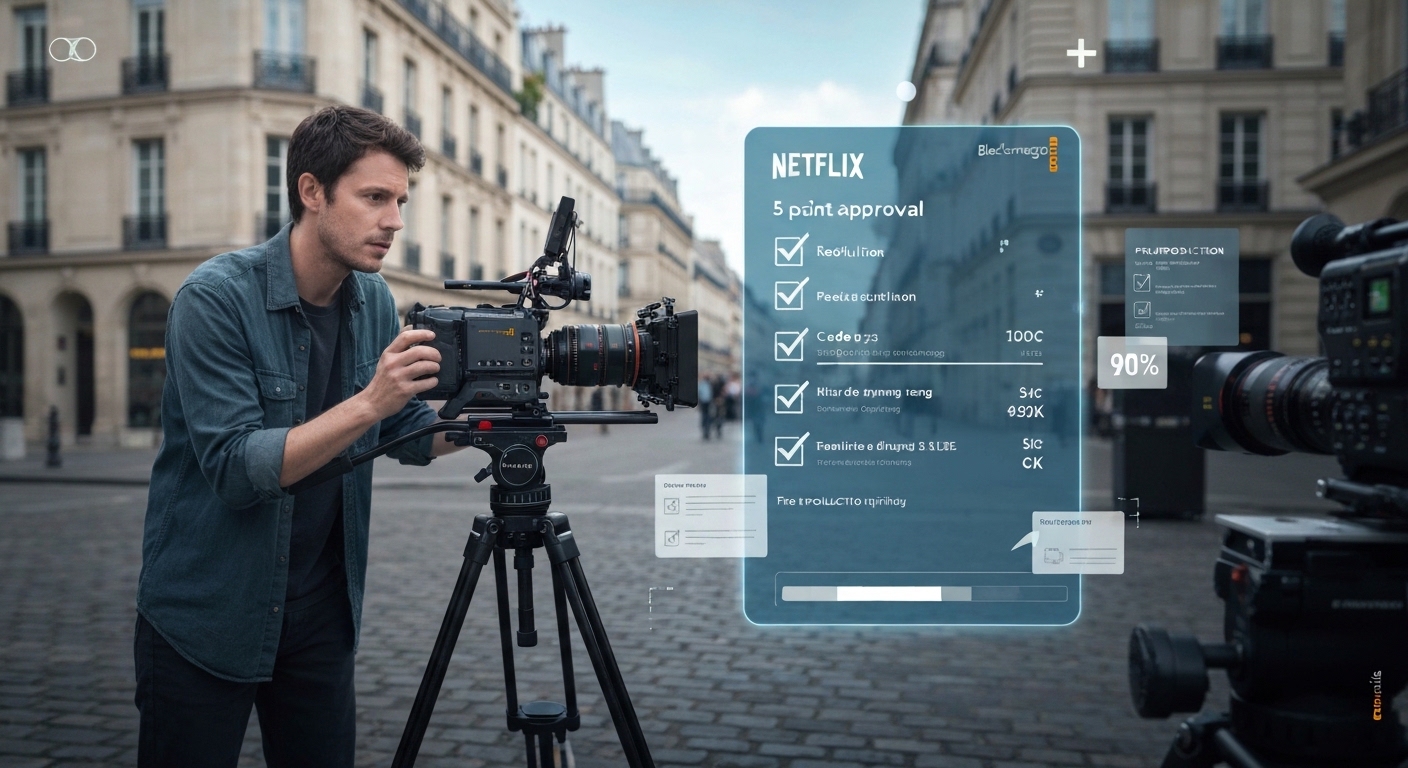
Netflix's 5-point checklist: what makes a camera 'approved'
Netflix's approval is a rigorous technical audit, not a brand endorsement. Cameras are evaluated against five non-negotiable criteria to ensure they meet the platform's quality baseline for original content.
- Dynamic Range: Measured in stops, this defines the camera's ability to capture detail in both shadows and highlights. Approved models must deliver sufficient latitude for cinematic grading.
- Resolution: A minimum true 4K capture capability is standard, with sensors like the URSA Cine 12K LF's 36 x 24mm large-format RGBW sensor providing ample data for future-proof mastering.
- Codec Compatibility: Specific recording formats, such as Blackmagic RAW (up to 5:1 compression for the URSA Mini Pro 4.6K G2) or CinemaDNG, are required for a robust post-production workflow.
- Workflow Compatibility: The camera must integrate seamlessly into professional post pipelines, a strength for Blackmagic due to its native integration with DaVinci Resolve.
- Color Science: Accurate color reproduction and predictable, gradable color science are essential for maintaining visual consistency.
For your Paris rental, focus on the approved models: the new URSA Cine 12K LF, the URSA Mini Pro 12K OLPF, and the URSA Mini Pro 4.6K G2. Choosing from this list is your first compliance step.
The 90% rule: your critical path to netflix compliance
Understanding the technical specs is only half the battle. The operational rule is absolute: Netflix mandates that 90% of a program's final total runtime must be captured on approved cameras. This threshold is non-negotiable for original narrative productions. It means that specialty shots (e.g., crash cams, drone shots) captured on unapproved gear cannot exceed 10% of your final edit.
As a post-production supervisor with a focus on platform delivery notes, "The 90% rule is a production accounting problem from day one. You must log every minute shot on each camera. A single day of B-roll on a non-approved camera can jeopardize your entire project's compliance if not meticulously tracked." To navigate this, implement this on-set checklist:
- Pre-Production Camera Audit: Confirm your primary and secondary cameras are on the current Netflix list.
- Designated "Non-Compliant" Gear: Clearly label any unapproved cameras (e.g., drones, GoPros) and pre-plan their limited use.
- Daily Shot Logs: The script supervisor must log runtime per camera, providing a real-time compliance percentage.
- Editorial Alert: Flag all non-approved footage in the edit for easy tracking and potential replacement.
This systematic approach turns a vague concern into a managed variable, protecting your investment.
Ursa cine 12k lf vs. the competition: why this approval is a game-changer
The URSA Cine 12K LF's approval is a market signal. It positions Blackmagic directly alongside ARRI, RED, and Sony in the realm of platform-approved cinema cameras, but with a distinct value proposition for indie filmmakers.
The game-changer is the combination of large-format 12K image quality at a fraction of the rental cost of an ARRI Alexa 35 or RED V-Raptor. Consider the strategic advantages:
- Cost-Effectiveness: The primary benefit. A production can allocate budget savings from camera rental toward talent, locations, or post-production, a critical advantage for independent films.
- Workflow Integration: The camera's native Blackmagic RAW codec and direct link to DaVinci Resolve create a seamless, vertically integrated post path. This reduces compatibility risks and potential transcode costs.
- Future-Proofing: The 12K sensor provides immense flexibility for reframing, stabilization, and visual effects extraction without quality loss, a significant asset for projects with complex post needs.
This approval shatters the perception that budget constraints force a compromise on distributable quality. The URSA Cine 12K LF offers a strategic alternative, not just a cheaper one.
Navigating paris rentals: the inventory gap you must plan for
A critical, practical challenge emerges: high-demand, newly approved cinema cameras face immediate inventory shortages in local rental markets. The URSA Cine 12K LF's approval in January 2026 means Parisian rental houses are still building their fleets. According to observed practices, flagship models often have waitlists weeks or months long, especially during peak production seasons.
You must plan for this gap. Do not assume availability. Your pre-production must include concurrent negotiations with multiple rental houses (e.g., Panavision Paris, Arri Rental France, and specialized digital cinema vendors) the moment your script is locked. Have a confirmed backup model (like the URSA Mini Pro 12K) as part of your contingency plan. Securing the camera is now as strategic as choosing it.
4 pre-production checks to secure your netflix delivery pipeline
Final compliance is won before the camera rolls. Integrate these checks into your planning:
- Camera & Codec Validation: Re-confirm your chosen rental model and its specific recording codec (e.g., Blackmagic RAW Q5) against the latest Netflix Partner Help Center documents.
- Post-Production Alignment: Engage your colorist and online editor early. Confirm their DaVinci Resolve workflow can handle your chosen codec and deliver the required IMF or ProRes master.
- Data Management Protocol: Design and budget for a robust on-set data workflow to manage the high data volumes of 12K RAW, including verified backups and checksums.
- Compliance Logging System: Establish and test the daily camera runtime logging process with your script supervisor to actively track the 90% rule.
This proactive framework moves you from hoping for compliance to engineering it.
Conclusion
You now have the complete blueprint to transform your Paris indie film from a creative vision into a Netflix-compliant master, ready for global distribution. We’ve moved from understanding the strategic value of the URSA Cine 12K LF’s homologation to mapping the precise operational checks that lock in your project’s eligibility.
Implement this framework, and your outcome is clear: significant budget savings versus traditional cinema cameras, a seamless DaVinci Resolve workflow, and, most critically, the security of knowing your technical delivery will pass the platform’s gatekeepers. The data is definitive—using an approved Blackmagic model and adhering to the 90% rule removes the single biggest technical barrier to distribution.
The timeline for action is immediate. The URSA Cine 12K LF was approved in January 2026; as a nascent asset in rental inventories, available units in Paris will be secured by producers who plan furthest in advance. The cost of inaction isn't just a missed opportunity; it's the tangible risk of a last-minute scramble, settling for a less capable camera, or worse, jeopardizing your project’s entire distribution pathway.
Before you move forward, ask yourself these three questions:
- Is my shooting schedule and backup camera plan designed to strictly comply with the 90% runtime rule?
- Have I validated the specific Blackmagic RAW codec settings with my post-production supervisor against Netflix’s latest delivery specs?
- Do I have a confirmed, written reservation for an approved camera model with a Paris rental house, not just a tentative inquiry?
This may seem complex, but you are now ahead of the curve. You’re not just renting a camera; you’re executing a compliant production strategy with a clear checklist in hand.
Your next step is to convert this plan into a guaranteed rental. Contact our production specialists today to verify real-time availability for the URSA Cine 12K LF in Paris and tailor the Netflix delivery checklist to your project’s post pipeline. 🎬