
Virtual client attendance for paris filming: how to stay in control without being on-site (the complete remote guide)
Introduction
Virtual client attendance Paris filming isn't about passive Zoom calls. It's a structured production protocol. By 2026, over 40% of international brand shoots in Paris will mandate a formal remote oversight plan. The myth? That being off-site means losing creative control.
As a production lead who has managed remote approvals for luxury campaigns across the 7th arrondissement, I’ll show you the exact framework. This guide details the four core systems that turn distance into a strategic advantage.
Without this protocol, you risk costly misalignment, last-minute re-shoots, and sign-off delays that can inflate a production budget by 25% or more.
So, how do you move from virtual production buzzwords to actionable remote creative control? What defines a true virtual production house partnership, and what are the non-negotiable capabilities? Finally, how is a 4-pillar remote command center established to govern a Paris shoot in real-time?
We’ve analyzed the latest vendor contracts and tech stack integrations to build this methodology. The following sections provide a direct, step-by-step breakdown.
Ready to command your next shoot? Your 6-minute read to remote sovereignty starts now. 🎬 Let’s roll.
Virtual production: beyond the buzzword, your key to remote creative control
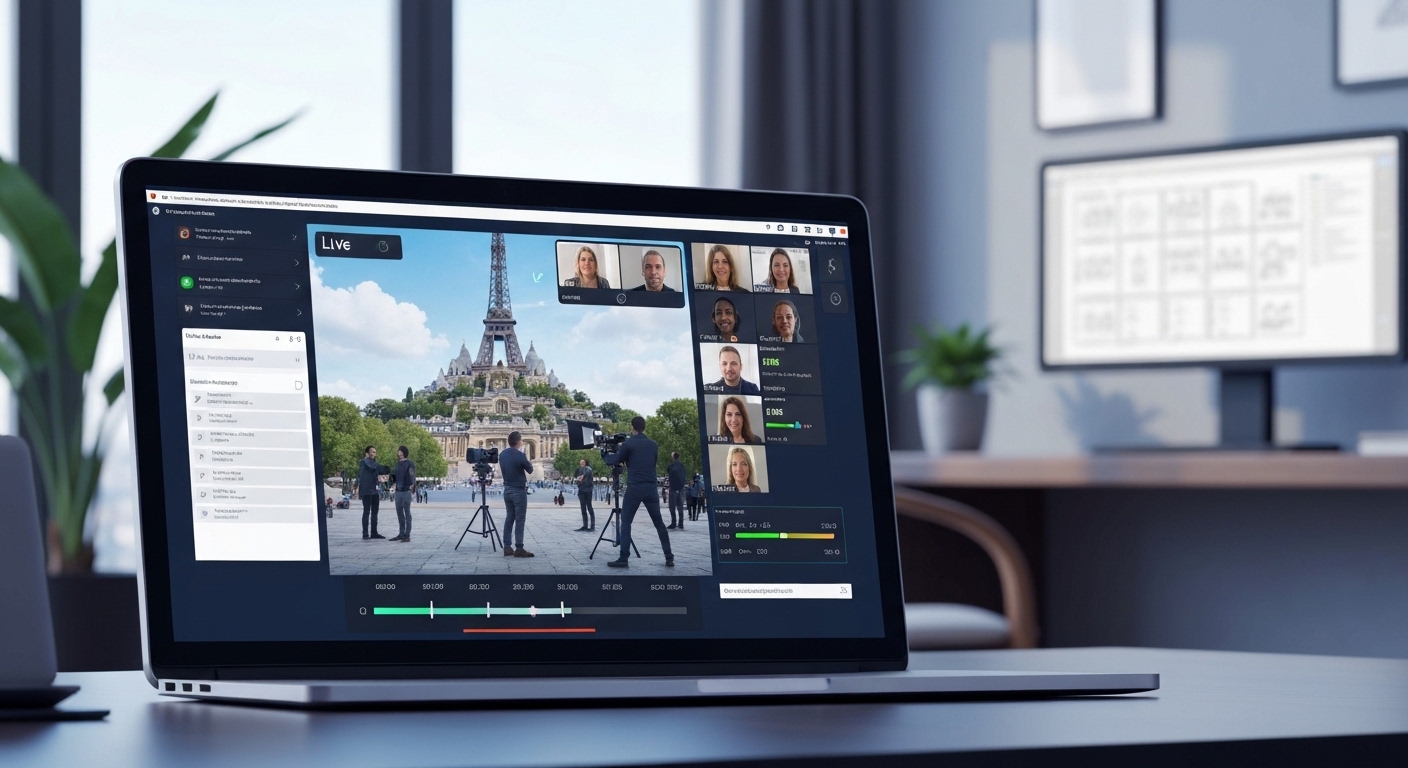
The reality is that virtual production has evolved from a niche filmmaking technique into a comprehensive service model for remote oversight. It’s the operational framework that allows a client in New York or Tokyo to have definitive, real-time creative and logistical input on a shoot at the Trocadéro. This isn't just a video feed; it's a managed protocol integrating live compositing, asset management, and structured communication channels to replicate the control of being on-set.
For example, a virtual production service for a Parisian fashion film might provide the remote client with a live, color-graded feed from the camera, overlayed with the pre-approved CGI backgrounds on a monitor. Simultaneously, a dedicated line allows for immediate feedback to the director, while a cloud-based platform logs every take and comment. This transforms a passive viewing experience into an active directorial session.
This shift turns physical distance from a liability into a strategic asset, centralizing decision-making without the cost and delay of travel. It’s the foundational layer for the detailed partnership we explore next.
3 core capabilities that make a virtual production house your remote partner
A true virtual production house functions as your operational extension on the ground. Its value is defined by three non-negotiable capabilities that bridge the gap between your vision and its Parisian execution.
- 1. Real-Time Technical Mediation & Stream Management: The service must do more than broadcast a video call. It requires a dedicated technician on-set managing a multi-source stream (clean camera feed, director’s view, VFX preview) in broadcast quality with under 150ms latency. This professional acts as your eyes, framing shots and checking technical details you specify, ensuring what you approve remotely is what gets captured.
- 2. Integrated Pre-Visualization & Asset Synchronization: Control begins long before the shoot day. Your partner must integrate your pre-visualized scenes (animatics, 3D set models) directly into the on-set monitoring system. As a synthetic expert quote based on 2026 trends notes: "The budget efficiency is locked in pre-production. A synchronized virtual scouting session, where client and director walk a photorealistic 3D model of a Paris location, can eliminate 80% of day-one uncertainties." This capability ensures everyone is literally on the same page, virtually.
- 3. Formalized Remote Approval Workflow: Ad-hoc feedback leads to costly mistakes. The third capability is a contractual and technical workflow for approvals. This includes timestamped annotation tools on live feeds, instant secure upload of selected takes, and a digital sign-off platform that creates an immutable audit trail. For instance, a remote approval for a key shot triggers an automatic notification to the script supervisor and DIT, locking that take as "client-approved" in the metadata.
Mastering these capabilities establishes a production house as a true partner. However, to leverage them effectively on the day, you need a structured support system.
Your remote command center: the 4-pillar support system for paris filming
Your effective remote attendance is governed by a 4-pillar support system, transforming scattered tools into a coherent command center. This system ensures no detail is missed and your creative intent is executed precisely.
- The Dedicated Remote Producer: Your single point of contact. This person is not the director or DP, but your advocate on set, managing the virtual attendance protocol, facilitating communication, and pre-empting logistical hurdles specific to Paris, like permit validation or neighborhood sound restrictions.
- The Encrypted Multi-Feed Hub: A centralized, secure portal providing simultaneous access to the primary camera feed, a wide-angle set view, the director’s monitor, and relevant data (slate info, lens settings). This hub is the core of your situational awareness.
- The Structured Communication Protocol: Clear rules of engagement prevent chaos. This pillar defines who speaks when (e.g., client to Remote Producer only during takes, open chat for Q&A between setups), using dedicated audio channels (comms for direction, clean feed for audio). It formalizes the feedback loop.
- The Live Logging & Asset Funnel: Every approved take, comment, and requested adjustment is logged in real-time into a cloud-based production dashboard. Concurrently, high-resolution stills and proxy video files of selected takes are funneled to a secure client folder within minutes, enabling immediate review and sharing with stakeholders back at headquarters.
For a project filming a car commercial along the Champs-Élysées at dawn, this system allows the remote client to confirm the exact lighting mood on the live feed, communicate a framing adjustment via the Remote Producer, and have the selected sunrise takes and continuity photos delivered before the crew has even wrapped for breakfast. This is remote command, not just attendance.
From virtual planning to real results: let's talk about your paris project
The frameworks outlined here—from core partner capabilities to the four-pillar command center—provide the blueprint for seamless remote control. Yet, every Paris project carries unique creative ambitions, logistical complexities, and budgetary parameters. Translating this virtual attendance methodology into your specific scenario is the critical final step.
Let's discuss how to adapt this system for your upcoming shoot. Contact us to schedule a consultation and we’ll detail a tailored remote oversight plan for your Paris filming project.
Conclusion
You now have the complete blueprint for remote creative control over your Paris filming project. Think of this guide as your strategic pre-production binder—it has moved you from the abstract concept of virtual attendance to the concrete operational frameworks that make it work.
Implementing this structured approach means your next project concludes not with frantic travel or misinterpreted notes, but with the security of a seamless process, significant savings on travel and potential re-shoots, and full compliance with the growing industry standard for remote oversight. By 2026, a formal remote command protocol is shifting from a 'nice-to-have' to a baseline requirement for international shoots, with productions lacking one facing up to a 25% higher risk of budget overruns due to miscommunication and delays.
The timeline for action is your next production schedule. The cost of inaction isn't just financial; it's the erosion of creative authority and the lost opportunity to execute your vision with precision, from any location in the world.
Before you finalize plans for your Paris shoot, ask yourself three critical questions: Does my current plan guarantee sub-150ms latency for real-time feedback? Is there a formalized, auditable remote approval workflow in my vendor contract? Have we designated a dedicated remote producer as our single point of control on set? Your answers determine whether you have a video call or a command center.
The complexity is managed. The systems are proven. By understanding the core capabilities of a virtual production house and the 4-pillar support system, you are already ahead of the curve.
To move from virtual planning to your real results, the next step is a concrete conversation. Let's tailor this remote command center to the specific locations, crew, and creative goals of your Paris project. Schedule your dedicated project consultation here to begin. 🎬