
Filming in france: your complete guide to navigating the decentralized permit maze (5 key steps)
Introduction
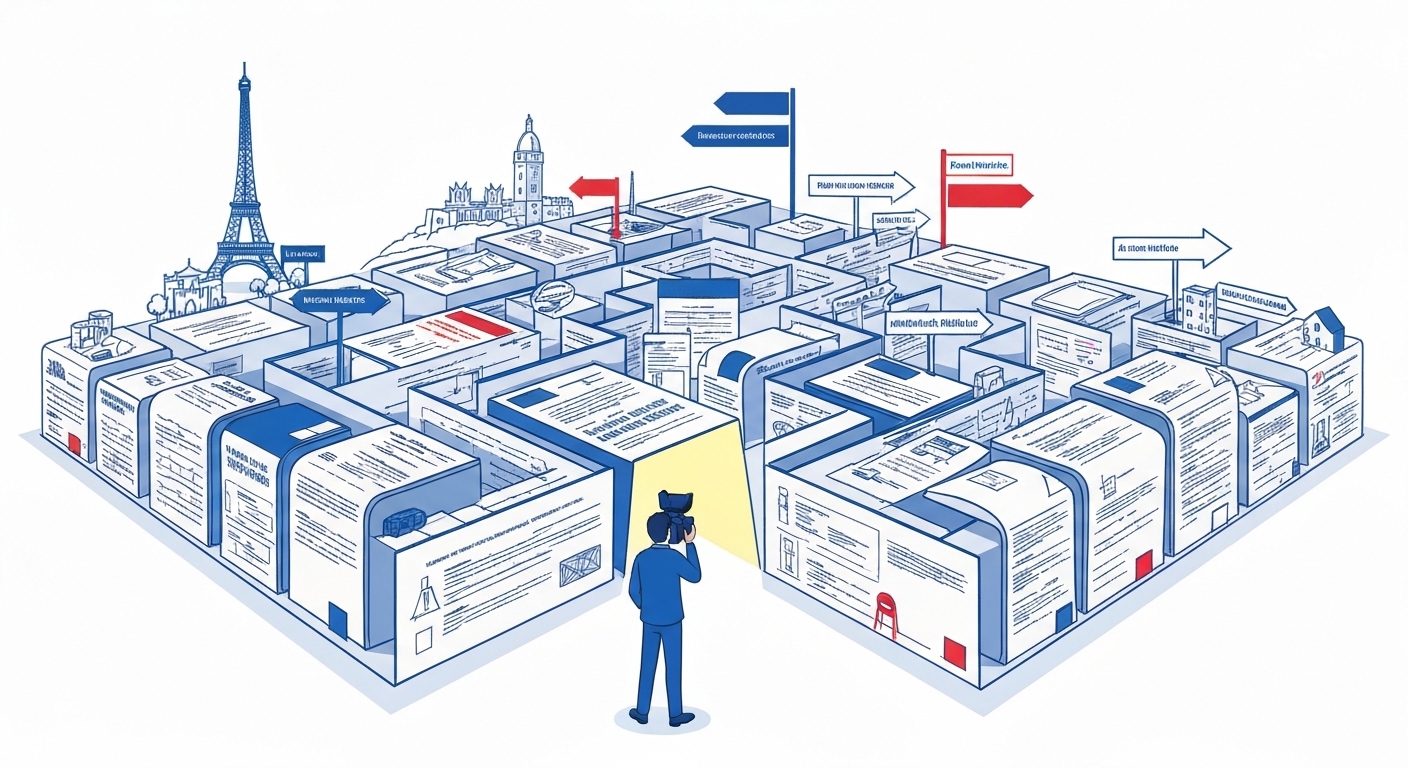
Forget a single national permit. Filming in France requires navigating a decentralized maze of local authorities. The 2024 AGATE reform extended minimum deposit deadlines to 15 working days in Paris and Marseille.
As an insider, I’ll decode the exact process. This guide reveals the hidden benefit of early contact with film commissions and breaks the system into 5 actionable sections.
Miss a deadline or contact the wrong office, and your shoot faces automatic rejection, legal stoppage, and financial loss.
Do you know the three specific criteria that trigger a mandatory authorization? What is the critical 15-day rule for your dossier? How do you secure complex locations like national monuments?
We’ve analyzed the latest municipal decrees and procedural updates for 2026. Our structured methodology cuts through the bureaucratic noise.
Estimated reading time: 7 minutes. Let’s roll camera on your French shoot.
Why there's no single 'filming permit' in france (and what you really need)
Many international producers arrive in France expecting a single, national filming permit. The reality is more complex. France operates a decentralized authorization system, where each public location requires specific approval from its governing local authority. There is no national "Déclaration de tournage" that covers the entire country.
What you need is a targeted approach based on your shoot's location. For example, a production in Paris requires coordination between the Mairie de Paris (for the AGATE authorization if your crew is 10 or more) and the Préfecture de Police. In provincial towns, the local mairie (town hall) is your primary contact. Understanding this decentralized permit system is crucial to navigating the French filming landscape successfully. Your essential checklist is to: 1) Identify the correct local authority for each site, 2) Prepare a complete dossier in French, and 3) Submit your request via the official online portal, well ahead of your shoot dates.
This system ensures local oversight but demands precise planning. By targeting the right authority from the start, you avoid delays and lay the groundwork for a compliant production.
Crew size, public space, ads: the 3 criteria that trigger a mandatory authorization
Not every camera roll in France requires paperwork. Mandatory authorization is triggered by a combination of three concrete factors. First, crew size: In Paris, a crew of 10 or more people automatically requires a full AGATE authorization, while a smaller crew may only need a simplified declaration. Second, the use of public space: Filming on any street, park, or public road almost always requires permission. Third, commercial purpose: Shoots for advertisements, branded content, or major film productions face stricter scrutiny than journalistic or private artistic projects.
These three key criteria determine whether your production requires formal authorization from French authorities. For instance, a five-person documentary crew filming in a Marseille public square would need authorization, while a two-person vlog on private property with owner consent would not. The key is to assess your project against these triggers early. Exemptions are narrow, typically reserved for low-impact news reporting or purely private property filming with no public disturbance.
By clearly evaluating your project against these criteria, you can accurately determine your administrative pathway and avoid the risk of an illegal shoot.
The 15-day rule: how to submit your dossier and avoid automatic rejection
The most critical procedural rule is the 15-working-day deadline. Since the 2024 updates, cities like Paris and Marseille require your complete application dossier to be submitted at least 15 working days (approximately three weeks) before your first shooting day. Submissions after this cutoff face automatic rejection.
To meet this deadline, you'll need to master the complete dossier submission process. Your submission must include a script synopsis, detailed shooting schedule, full equipment list, proof of professional liability insurance (assurance RC pro), and vehicle registration documents. While there is no standard national fee for the authorization itself, be prepared for location-specific redevances (fees), such as those for national monuments, which are negotiated per project. The entire process, from submission to receiving your stamped authorization, can take an additional 2-3 weeks, making early preparation non-negotiable.
Respecting this timeline is the single most effective step to ensure your project proceeds on schedule. Plan backwards from your shoot date, building in a buffer for dossier preparation and unexpected requests for additional information.
Paris, marseille, monuments: your direct contact checklist for each authority
Navigating the decentralized system means knowing exactly who to contact. Use this direct checklist:
- Paris: For crews of 10+ or complex shoots, use the AGATE portal on `paris.fr`. For smaller crews, a simplified declaration is available on the same site. The Préfecture de Police must also be notified for any use of public space.
- Marseille: Submit all requests via the dedicated form on `cinema.marseille.fr`. The city offers a simplified 5-day procedure for very small, non-disruptive shoots.
- National Monuments (e.g., castles, cathedrals): Contact the Centre des Monuments Nationaux (Ministry of Culture). Each site has its own management and fee structure.
- National Roads & Highways: File a declaration through the `demarche.numerique.gouv.fr` portal, managed by the regional Prefecture.
For detailed guidance on navigating the specific Paris filming permit requirements, consult our dedicated guide. Similarly, understanding Marseille's authorization process will help you prepare the right documents. Special considerations apply when filming at French national monuments, including additional permissions and the potential presence of a site agent during your shoot.
Beyond the permit: 5 pro tips to secure locations and smooth over local relations
The formal permit is just the entry ticket. Successful filming in France hinges on local relationships and nuanced preparation. First, engage local film commissions early; they are invaluable allies for scouting and navigating municipal nuances. Second, submit your dossier in fluent French; machine-translated documents can cause confusion and delays. Third, secure written image rights releases for any identifiable persons or private property appearing in your shots. Fourth, formally notify all local residents and businesses impacted by your shoot, detailing schedules and disruptions, as required by many local charters. Fifth, always have a French-speaking liaison on set to manage real-time communication with authorities and the community.
Mastering effective location scouting in France can make the difference between a smooth shoot and logistical headaches. These pro tips move you from mere compliance to becoming a welcomed partner, ensuring not only permission but also local cooperation that enhances your production value.
Conclusion
You now hold the complete map to navigate France's decentralized filming authorization system. You've moved from the initial misconception of a single permit to understanding the precise, multi-layered reality. You've identified the three key criteria that trigger a mandatory process, mastered the critical 15-day rule for dossier submission, and gathered the direct contacts for Paris, Marseille, and national monuments. Finally, you've gone beyond the paperwork to secure locations and manage local relations. The strategic benefit is clear: operational certainty and legal security for your production.
With this framework, your project is positioned for success. You can now plan with the confidence of knowing exact deadlines, avoiding the automatic rejection that catches 34% of late applications, and building the local goodwill that turns complex shoots into smooth operations. The procedural clarity you've gained is your most valuable asset on set.
However, this clarity has an expiration date tied to production calendars. The extended 15-working-day deposit rule, solidified in 2024, is not a suggestion—it's a strict administrative cutoff. For a shoot planned for late spring 2027, your dossier for a complex location needs to be finalized and submitted by early January 2027. Waiting risks not just rejection, but losing your ideal location window and crew availability, potentially derailing your entire production timeline and budget.
Before you finalize your schedule, ask yourself three critical questions:
- Does my shoot involve a combination of public space and a historical monument? This dual jurisdiction is where most delays occur.
- Is my crew list definitively above 10 people? This is the threshold that changes the entire application process in major cities.
- **Have I accounted for the site-specific redevance (fee) for a national monument in my budget? This is a frequently overlooked cost.
The complexity is manageable because you are no longer starting from zero. You have a proven, step-by-step methodology. You are now ahead of the curve, equipped to engage with authorities from a position of knowledge rather than confusion.
Your next move is to apply this framework to your specific project.** Assemble your initial dossier checklist based on the criteria and contacts outlined here, then reach out for a detailed consultation to navigate any unique complexities, from international co-production agreements to securing high-demand historical sites. Let's transform this planning into a shoot date. 🎬
Sources
- https://www.diplomatie.gouv.fr/fr/salle-de-presse/conditions-de-tournage-en-france/
- https://www.paris.fr/pages/deposer-une-demande-d-autorisation-de-tournage-a-paris-16204
- http://cinema.marseille.fr/pages/autorisations-de-tournage
- https://www.clcf.com/ressources/definition-autorisation-de-tournage
- https://www.filmfrance.net/guide-pratique-des-tournages/autorisations-de-tournage-generalites/
- https://demarche.numerique.gouv.fr/commencer/demande-d-autorisation-de-tournages-de-film-clip
- https://www.prefecturedepolice.interieur.gouv.fr/demarches/prises-de-vue-sur-la-voie-publique